
Your teaching keepsakes
What to do with thank-you cards from pupils: five ways to keep them
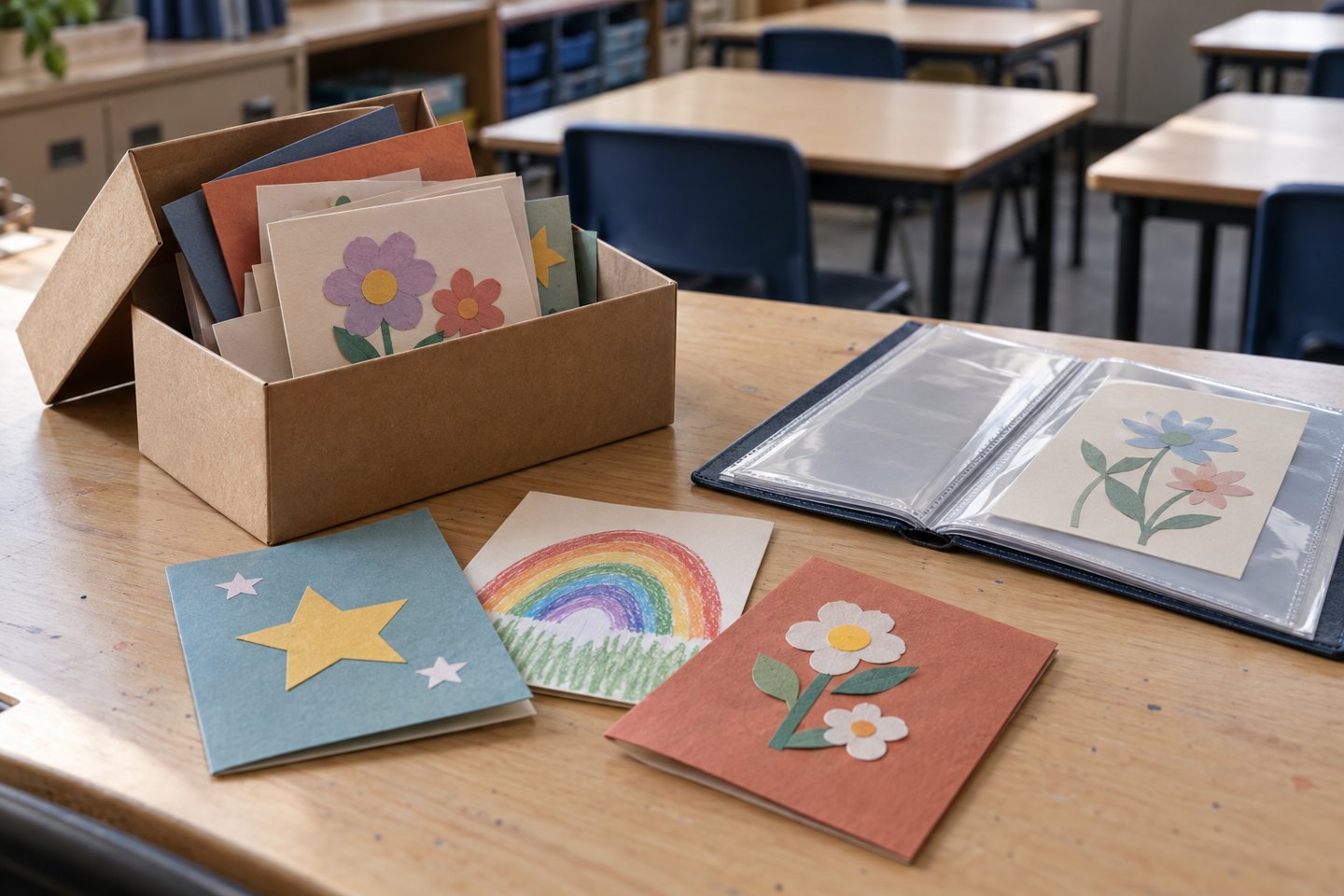
A folded card fits in a drawer. A class drawing on A2 paper does not. After a few years, keeping thank-you notes can become less about sentiment and more about finding somewhere to put them.
For a quick solution, keep the originals you particularly value in one box. If space is the problem, photograph selected cards and drawings, subject to your school’s rules. A folder, scrapbook or small display makes sense if you want to look through them more often. You can combine methods without copying every card twice.
Choose what you want to keep
Before buying storage, ask what matters about each item: the words, the handmade object, or the memory it brings back. One card may matter for its words; another because the whole class signed it. Equally, you may want to keep a handmade card for its wonky construction.
If you are reducing a collection, try three piles: originals to keep, items to photograph, and items you are ready to let go. Put the uncertain few back in the box for now. You do not have to scan the whole backlog before tidying your desk.
Five options at a glance
| Method | Best when… | Main drawback |
|---|---|---|
| Box | You want to put cards away in seconds | Finding a particular card |
| Pocket folder | You want to browse flat notes | Bulky cards do not fit well |
| Scrapbook | You enjoy arranging a small collection | Time spent making it |
| Digital copies | Space is limited or work is oversized | Capture, backup and loss of texture |
| Small display | You want a few favourites in view | Limited space; originals may fade |
1. Keep a single box
A lidded box is the least fiddly option: open it, put the card in, close it. Choose one large enough for your usual cards without bending them, and leave room for folded or raised decorations. An envelope for each school year can help if you want a little order; there is no need to catalogue individual pupils.
A clean box you already own is a practical starting point. For treasured paper you want to keep long term, look for acid-free, lignin-free storage. Keep it somewhere dry indoors rather than a damp garage or hot loft. 1
The drawback is retrieval. If you enjoy dipping into a mixture, that may not matter. If you want to find one particular message quickly, a folder will be easier.
2. Use a folder with clear pockets
A ring binder or display folder works well for flat notes and smaller cards. You can turn pages without emptying a box, and add a year divider if useful.
Put double-sided notes in their own transparent pockets so both sides remain visible. Folded cards may need removing to read; check that the pocket opening is wide enough. Avoid squeezing several cards into each sleeve simply to save space.
For long-term storage, choose pockets made from polyester, polypropylene or polyethylene rather than PVC. 1
This is less suitable for thick collage, pop-up cards or large drawings. Keep those separately rather than cutting or folding them to make the folder work.
3. Make a small scrapbook
A scrapbook suits someone who enjoys arranging a collection. It can bring together a few cards from a leaving class, with a brief note about the year or occasion.
Use pockets or acid-free photo corners so originals remain removable, rather than sticking them down. This also helps with cards that open or have writing on the back. Avoid overfilling the album. 1
Its main cost is your time. Choosing pages and writing captions can turn a pile of cards into a new job. If making the book appeals, use a small selection. If it does not, a box preserves the originals without the craft project.
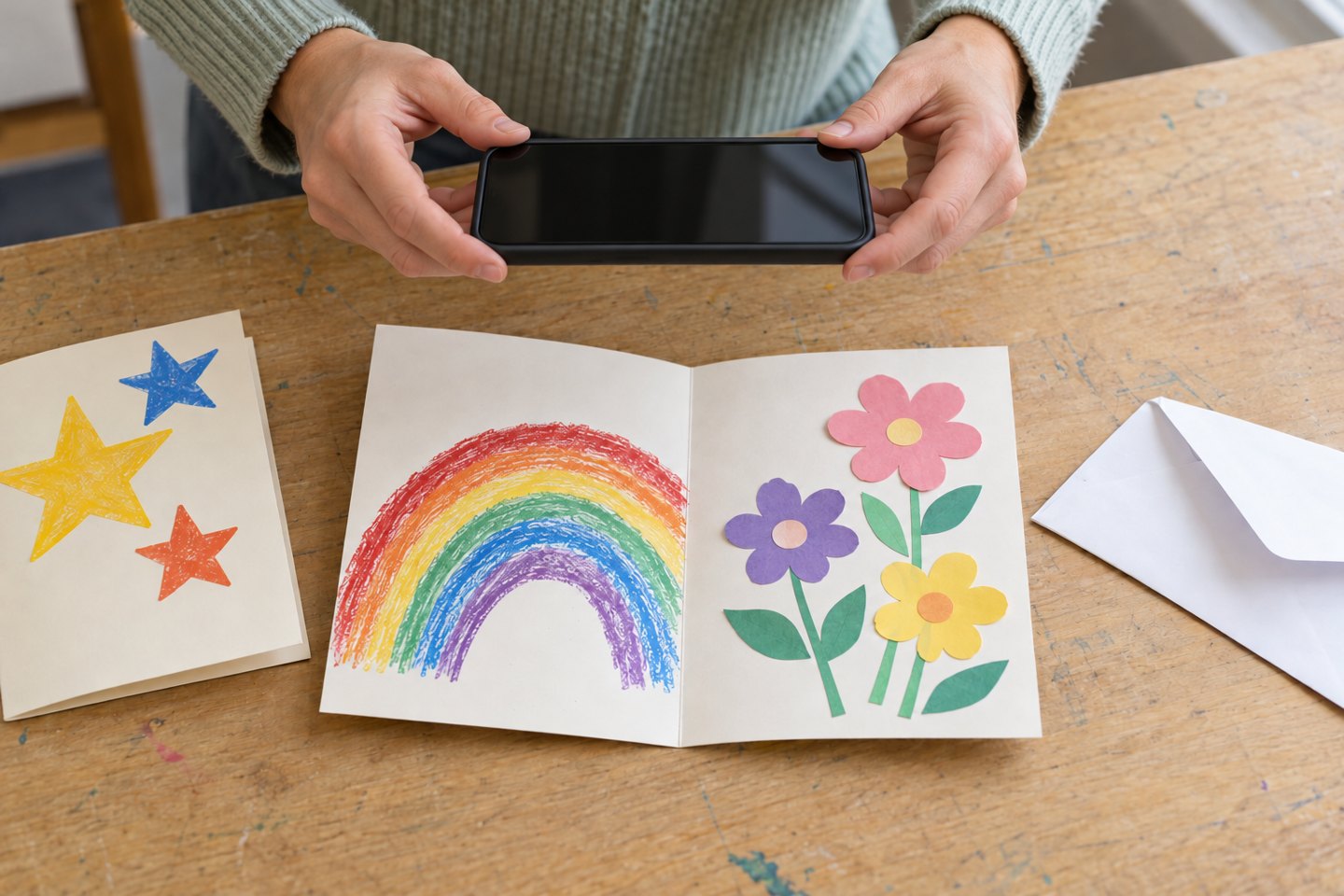
4. Photograph or scan selected cards
Digital copies are useful when the message matters more than the paper, or a drawing is too large to store comfortably. Use a device and storage location permitted by your school; check the privacy points below before taking photographs.
Lay the item on a plain surface in even daylight, hold the camera parallel to it, and check the result at full size. Can you read the faint pencil? Have you cut off a corner? A flatbed scanner works for flat pieces that fit completely, but a camera is easier for bulky cards.
For a folded card, capture the front and the inside, plus the back if anything is written there. Take the photographs in sequence and keep them together in one folder. There is no need to turn every card into a PDF. A year label may be all the organisation you need.
Digital storage still needs care. Check that you can find and open the copies, and keep a separate backup in a permitted location. Retain originals that would be irreplaceable to you: digital files can also be lost. 3
5. Display a few favourites
A small frame or shelf display gives selected cards a place in everyday view. This is a way to enjoy a few items, with a box or folder for the rest.
Consider who can see the display, particularly in a classroom, shared office or video-call background. Choose items without identifying details on show.
Light can fade paper and ink, even away from direct sunlight. Displaying a copy and storing the original protects the original from that exposure. If you prefer the real card on display, limit its time out. 2
What about the awkward ones?
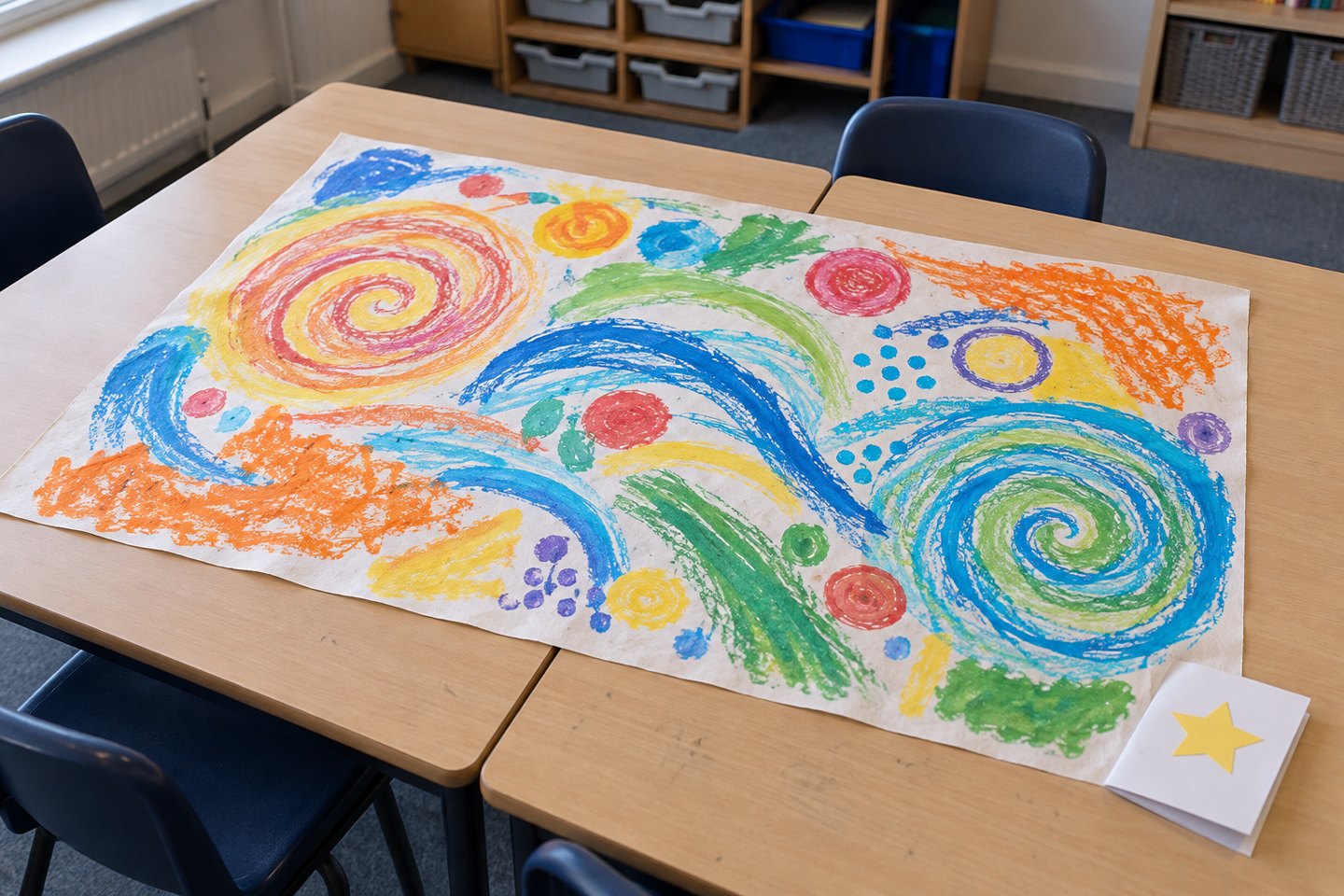
Oversized drawings: photograph the whole piece, then any detail or message that becomes too small to read. If keeping the original matters, use a large folder and store it flat where possible. Do not add folds just to fit a smaller box. If you have no flat storage space, a checked photograph may be the practical compromise.
Cards signed on several sides: check every surface; the back can be easy to miss.
Too many similar cards: choose by what you would like to revisit—distinctive wording, a particular occasion or a handmade detail. Keeping an original without making a digital copy is also a perfectly workable choice.
A privacy check for any method
Follow your school’s rules on taking material home, personal devices and cloud storage. If the rules are unclear, ask its data-protection lead. Before photographing, cover names, faces, signatures and sensitive details you do not need; check the background too. Removing a name alone may not prevent someone being recognised. Personal devices may automatically upload photos to cloud accounts. 4
Keep identifiable paper and digital material away from unintended viewers. Receiving a private thank-you does not give you permission to post it publicly. If a note raises a safeguarding concern, follow school procedures rather than treating it as a keepsake.
Start with the cards currently on your desk. Choose somewhere they fit, keep the ones you want, and make copies only where that solves a problem.
From Chalkmarks: the Thank You Box lets you keep photographs of cards and typed thank-you notes together in one private place, so they are easier to find again. Remove identifying pupil details before saving, follow your school’s rules, and keep originals or separate backups of anything important.