
Teaching moments worth keeping
What to write in a teaching journal when you only have a few words
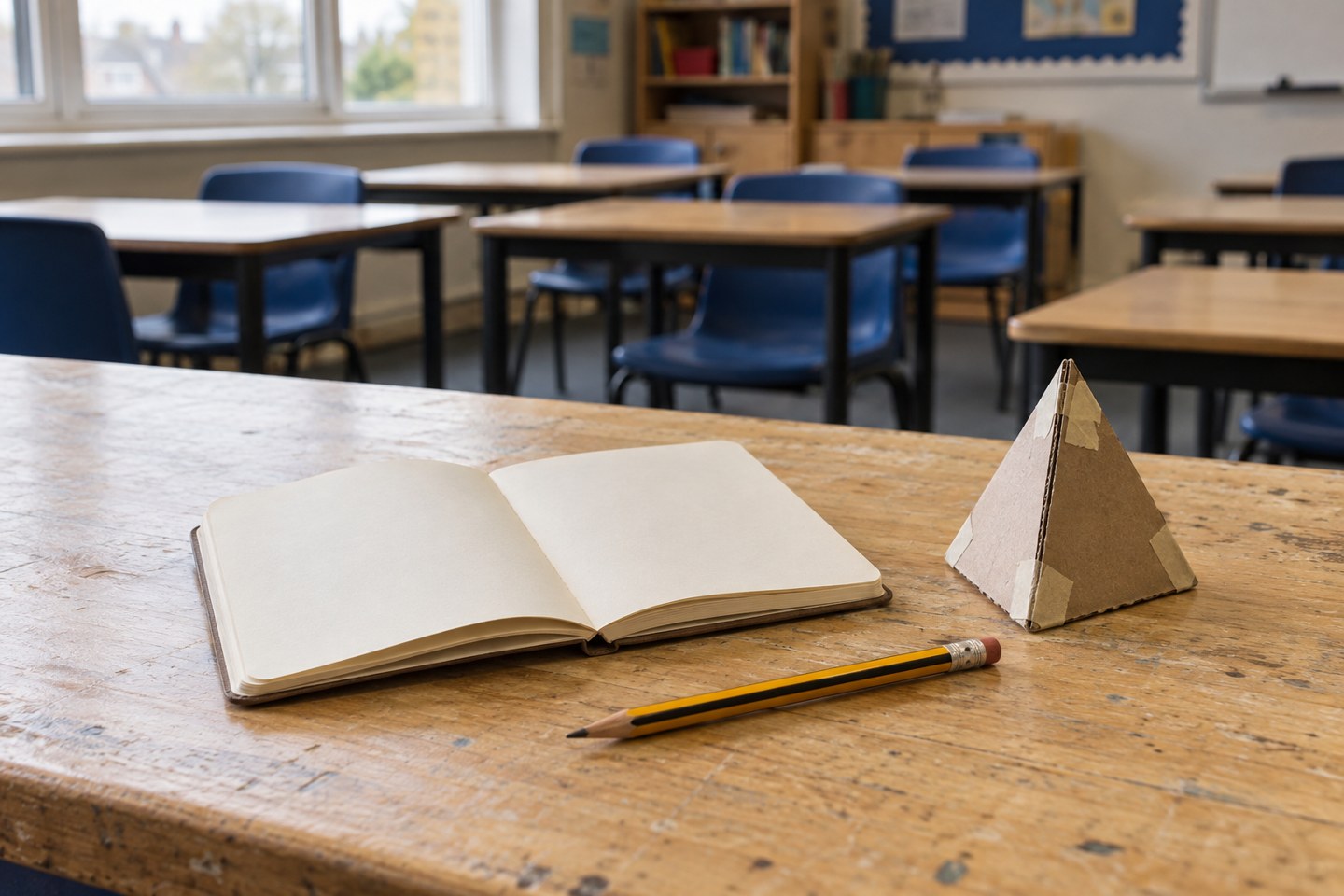
A teaching journal does not have to contain an account of the whole day. If you want to remember a particular moment, write what happened, the detail you would otherwise lose and, if useful, what you want to return to. That might be two sentences. It might be a fragment.
The difficulty is often choosing what to put down. “Good lesson” is quick, but tells your future self very little. A full lesson evaluation takes more attention than you may have between clearing the room and getting home. There is a useful space between the two: a short, specific note for your own reflection.
Start with the detail, not a verdict
Think of the part you would tell someone if you had half a minute. It could be an explanation you changed, a question you want to think about, a moment of humour, or something you noticed about your own teaching.
Instead of asking whether the day was good or bad, ask: what actually happened that I want to remember? There is no need to turn the answer into a judgement about yourself.
These are invented examples, included to show the difference, not accounts of real classrooms:
“Explaining diffusion” becomes “I used a crowded doorway to explain diffusion, then noticed where the comparison stopped working.”
A complete entry can be as short as “Cardboard model finally balanced on its own.” It keeps a particular moment without turning it into an evaluation.
“Lovely afternoon” becomes “Opened the cupboard and found the model I had forgotten making.”
The extra detail is doing the work. None of these needs a polished ending or a claim that learning improved.
Choose one of three short forms
Use whichever form suits the moment. These are alternatives, not three boxes to complete.
A snapshot: “The detail I want to keep is…” This is useful when the moment matters in itself. Write a sound, an object, a change you made or something you noticed. You do not have to extract a lesson from it.
A turning point: “I changed… when…” This suits a moment when your plan shifted. You might record that you put the diagram beside the explanation rather than on the following slide. Keep it about your decision; a pupil-by-pupil account is unnecessary.
An open question: “I’m still wondering…” This works when you have not reached a conclusion. A question about whether a demonstration distracted from its explanation can stay a question. You do not need to resolve it before saving the note.
If a starter makes your writing sound unlike you, drop it. A few ordinary words are more useful than a sentence built to satisfy a template.
Give your future self just enough context
A note such as “the blue one worked” is unlikely to survive the next timetable change. Add the missing noun: the blue filter, the blue exercise book or the blue route on a map. A topic or broad time reference may be enough to place the moment.
Keep only context you need. You might write “during the electricity topic”. A date can help, too; consider whether the combination of time, class and circumstances could identify someone. If context would expose somebody else’s private circumstances, write about your own response in more general terms or leave the moment out of a personal collection.
Choose a place you can return to: a small notebook, an approved digital note or a private memory app used in line with school policy. Paper is quick and needs no device; digital text can be easier to amend or organise. Neither choice removes the need to consider who might see it.
When the moment was difficult
You do not have to make every entry uplifting. You can record disappointment or uncertainty without turning another person into the subject of a private case history.
For example, “I rushed the explanation because I was watching the clock” describes a choice you might revisit. “The room change left too little setup time” records a constraint. Neither requires a positive spin or assumes the problem was yours to solve alone.
If the issue needs action, take that action through the appropriate school route. A journal entry is not a substitute for reporting a safeguarding concern, recording an incident or asking for support. You can keep a personal note about your own experience without using it as the official record.
Keep the note small enough to finish
Add enough context to recognise the moment later and remove identifying details. You do not need to add a target or a photograph. If you missed several weeks, write about something you remember now rather than reconstructing a diary.
Later, the note may suggest something to try. It may simply remind you of a moment you were glad to keep. Both are reasonable uses for a personal teaching journal.
From Chalkmarks: Chalkmarks offers a private place to save a few words about a teaching moment and revisit older memories. Keep entries free of pupil names or identifying details, follow your school’s rules and choose the method that suits you.
Sources
Privacy and school-records guidance; the writing prompts are editorial suggestions.
ICO: Introduction to anonymisation — Open source
Government of Jersey: Keeping Children Safe in Education — Open source